Keep Exploring!
When you make a purchase from Seed Savers Exchange, you help fulfill our nonprofit mission to protect our food and garden heritage. Do even more good by making a donation to help us preserve and share even more heirloom varieties!

This Valentine’s Day, you may be tempted to give your loved one a bouquet of flowers. We get it. A live flower bouquet is traditional. It’s a classic.
But why gift a singular bouquet that may last a week…when you could instead gift MANY bouquets that will last for MONTHS? (And save some money while you’re at it!)
Bouquets are great. But flower seeds are even better!

Seed Savers Exchange has exactly what you need for gifting flowers. We offer many excellent cut flower varieties for you to customize your bouquet to your loved one’s tastes. Learn how to grow and save flower seeds.
We created this Valentine’s Day Gift Guide to give you inspiration. Keep reading to see our top picks for
When you make a purchase from Seed Savers Exchange, you help fulfill our nonprofit mission to protect our food and garden heritage. All our seed offerings are open-pollinated, non-hybrid, and non-GMO.

Our Classic Blooms seed collection has six carefully-selected, high-performing cut flower varieties that will bring beauty to your garden and bouquets to your kitchen table or Valentine’s bedside.
This collection includes one packet of each of the following varieties in a gift-able package:
Please note: In the case of a seed packet shortage, we will substitute a variety. Rest assured—you’re still getting six great varieties!
Shop the Classic Blooms seed collection.

What if your loved one isn’t really into flowers? If you still want to bring romance to the garden, we have just the varieties for you! Tasty and romantic, these four varieties make a wonderfully thoughtful Valentine’s Day gift—and keep on giving throughout the gardening season!
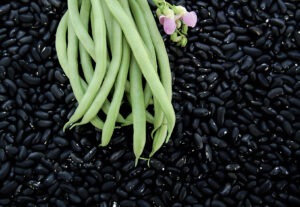
This popular and historic bush bean is prolific and dependable. A great dual-purpose variety, ‘Black Valentine’ can be used for both fresh snap beans and dry soup beans. Plus, this variety is tolerant of cool temperatures! Organic.
Shop ‘Black Valentine’ bean seeds here.

This heirloom butterhead lettuce was donated to Seed Savers Exchange in 2005 by Steve and Anna Marie Stoller of North Judson, Indiana. Steve received the seeds from Amelia Scharlach Schini, whose grandmother brought them with her when she emigrated from Alsace-Lorraine in the 1880s. ‘Three Heart’ is a small chartreuse butterhead with crisp, tender leaves and a mild flavor. Organic.
Shop ‘Three Heart’ lettuce seeds here.
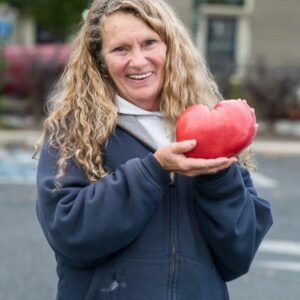
NEW for 2026! Peg Davis of Middlebrook, Virginia, received four tomato seeds from a student in her 9th-grade horticulture class. The student’s deceased grandparents had grown the variety in Pennsylvania all their lives, but the family was no longer interested in continuing the tradition. For nearly five decades, Peg has grown and selected seeds from this beautiful, productive, and flavorful pink beefsteak variety on her farm in the Shenandoah Valley of Virginia. Learn more about Peg Davis and the ‘Peg O’ My Heart’ tomato.
Peg donated this outstanding variety to Seed Savers Exchange in 2022, and ‘Peg O’ My Heart’ makes its debut in the Seed Savers Exchange catalog as a From the Collection variety in 2026. Prolific indeterminate plants produce large, 1-2 pound, firm fruits with meaty flesh and a complex, balanced, classic tomato flavor.
Shop ‘Peg O’ My Heart’ tomato seeds here.

This family heirloom was brought to the United States in 1901 by John Simon, a winemaker from Gyor, Hungary, near Budapest. His son, Ed Simon, grew the tomatoes in Pennsylvania and shared them with the Seed Savers Exchange community in 1988, and the variety made its debut in the Seed Savers Exchange catalog as a From the Collection variety in 1999.
The potato-leaf plants produce huge, pink oxheart fruits that weigh upwards of one pound, have very few seeds, and show almost no cracking. This indeterminate variety is one of our favorites for fresh eating, canning, and making roasted tomato sauce.
Shop ‘Hungarian Heart’ tomato seeds here.
Whimsical, diverse, and self-sowing, poppies are popular for a reason! Although short-lived, fresh in the vase, these breadseed poppies produce large pods that add excellent interest to both fresh and dried arrangements.
Tip: Harvest poppies when the flowers are half-open and sear the stem ends with a lighter or boiling water.
Caution: All plant parts of poppies except the seeds are toxic.

Stunning…striking…splendid—superlatives abound when describing these dark-pink heirloom “chrysanthemum”-type flowers. Plants reach 2.5 feet tall, mature early- to mid-season, and readily self-seed. Brought to the United States from Germany by the Gatterman family in the 1800s, these poppies can stand alone or blend seamlessly into a vibrant mixed border. The variety made its debut in the Seed Savers Exchange catalog as a From the Collection variety in 2022. Organic.
Shop ‘Gatterman Heirloom’ seeds here.

NEW for 2026! Seed Savers Exchange received this gorgeous, easy-to-grow flower circa 2004 and suspects it is the same variety that Sandra Cumming of Alberta, Canada, wrote about in the 1982 Yearbook: “This summer I hope to obtain poppies from a nearby Hutterite colony that have been handed down for many years and grown extensively each year for seeds…to bake an excellent poppy-seed cake.”
Large, showy flowers range in color from white to light pink with a darker-pink patch in the center. Sturdy-stemmed plants grow up to three feet tall and produce large, elliptic pods. Bees love its pollen, so you’ll enjoy pollinators aplenty throughout the blooming season too! The variety makes its debut in the Seed Savers Exchange catalog as a From the Collection variety in 2026.
Shop ‘Hutterite Breadseed’ seeds here.

One of our favorites! Jan Suchomel of Van Horne, Iowa, found this poppy growing in the backyard garden when she moved to Van Horne from Cedar Rapids in 1967 and, over the next three decades, gave its seeds to all her family members. She was so taken with the flower that she even planted some of its seeds at the senior complex she moved to in 2003 so that she could continue to enjoy its colorful blooms.
Plants grow 2 to 3 feet tall, bloom from June to July, and produce beautiful double lavender blooms. This variety made its debut in the Seed Savers Exchange catalog as a From the Collection variety in 2023. Organic.
Shop ‘Lavender Double’ seeds here.
Looking for some flower types that you might not find in the typical home garden? These historic and unique varieties are perfect for your Valentine who likes something a little different, yet still stunning.

A real head-turner, this variety has been growing in English gardens since the 16th century—that’s right, more than 500 years ago! This stately, quick-growing ornamental plant has a tropical appearance and produces large red-tinged foliage and brightly colored seed pods. Larger than life, this annual grows from 6-8 feet tall and produces some of the most unique flowers you will ever see! Caution: Seeds and seed pods are poisonous.
Shop ‘Gibsonii’ castor bean seeds here.

These textured flowers make a statement! This celosia was given to Seed Savers Exchange by longtime members Orral and Joan Craig, who found it growing in an Amish garden near Arthur, Illinois. Cockscomb-type celosias are native to the tropics and were introduced to Europe in the 1570s. A bedding plant and cut flower for both fresh and dried arrangements, ‘Amish Cockscomb’ grows to 12 inches and produces fuzzy hot-pink-to-red flower heads that resemble the comb of a rooster. Organic.
Shop ‘Amish Cockscomb’ seeds here.

Feathery and unique, love-in-a-mist, also known as Nigella, adds whimsy and interest to any garden. A historic variety, ‘Miss Jekyll’ first appeared in England around 1570. Some very imaginative folk names include Love-Entangle and Jack-in-Prison. Self-seeding, annual plants grow to 18-24 inches tall and tolerate dry weather. In addition to being a great cut flower, plants produce intriguing seedpods that dry well. However, it is hard to resist popping the seedpods like a balloon when they are green!
Shop ‘Miss Jekyll’ love-in-a-mist seeds here.
For the budding gardener, easy-to-grow seeds make lovely gifts! These varieties are perfect for beginners and more experienced gardeners alike, and are wonderful in bouquets.
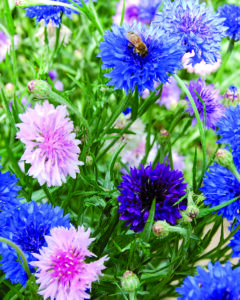
Bachelor’s Buttons are dainty but lovely, with starburst-shaped flowers that bloom throughout the season in an extensive range of colors. These flowers look great in mass plantings, and their stems are excellent for cutting and arrangements. These self-sowing annuals grow to 2-3 feet tall in a mix of purple, pink, white, and blue flowers, and will tolerate poor soil.
Shop Mixed Bachelor’s Buttons seeds here.

Calendulas are a truly versatile plant—in addition to stunning in gardens and vases, they are edible and have traditionally been used in creams to soothe irritated skin and reduce inflammation. Tangy and sweet, use calendulas in teas, salads, or as a garnish on summery drinks.
Calendulas are self-seeding, hardy annuals and are great for container growing. Typically reaching 18-24” tall, calendulas make a wonderful companion plant, attracting beneficial insects and pollinators and repelling unwanted pests, including tomato worms and nematodes. The ‘Neon’ calendula has especially brilliant, red-orange blossoms that command attention no matter where they’re grown.
Shop ‘Neon’ calendula seeds here.

As far as flowers go, few are as easy to grow (and well-loved!) as zinnias. Extracted from the Moscow branch of the Vavilov Institute in a coup by breeders in 1991, this spectacular zinnia variety thankfully made its way to North America. It produces 3’ tall upright plants with 3-4” single and double flowers that are brilliant red, with an occasional orange blossom. Zinnias are wonderful cut flowers with a long vase life. Organic.
Shop ‘Gift’ zinnia seeds here.
Imagine a peaceful garden filled with the gentle buzz of bumblebees and the fluttering wings of butterflies. Bring some garden joy to your loved ones with these flowers beloved by pollinators!

Unsurprisingly, ‘Bee’s Friend’ attracts many different species of bees and other beneficial insects! This annual grows 12-24 inches tall and bears subtle lavender-blue flowers with curved spikes that put on a show in your garden. Often used as a cover crop, this plant’s common name is a translation of Bienen-freund, German for “bee’s friend.”

Also known as Mexican Sunflower, this branching plant grows to 4-6 feet tall (and sometimes even taller!) and produces fiery orange 2-3” flowers that attract lots of butterflies all summer long until frost. Gardeners love its ability to attract pollinators and its extended bloom period. Contrary to its common name, torch sunflowers are not actual sunflowers and belong to the genus Tithonia. Native to Mexico, this variety is vigorous, heat-loving, and drought-tolerant.
Shop Torch Sunflower seeds here.

No pollinator garden is complete without native plants. Blooming from midsummer until early fall, butterflyweed is native to North America, attracts bees, hummingbirds, moths, and butterflies, and—along with other milkweeds—serves as an essential host plant for monarch butterflies. Growing 2-3 feet tall, butterflyweed produces beautiful, bright-orange flowers that cover each plant in summer and fall. This perennial flower is hardy to zone 4 and, if sown early, blooms reliably from seed the first year. Plants grow well in dry, sandy soil and well-drained loams.
Shop Butterflyweed seeds here.
These flower mixes make perfect gifts for those who love a rainbow of colors in the garden and in their bouquets.

This flower mix is one of our most popular packets for a reason, and even graced the cover of the 2026 catalog! Inspired by gardeners’ love for zinnias, Seed Savers Exchange created our very own zinnia mix with proven varieties from Applewood Seed Company. Fast-growing plants reach 30-40” tall and produce a plethora of long-blooming, 4’5” single and double flowers with long stems, perfect for bouquets. Also excellent for drawing pollinators to your garden, zinnias especially appeal to butterflies. This mix is a mainstay in the gardens at Heritage Farm and delights visitors.
Shop SSE zinnia mix seeds here.

Cold-hardy and unique, snapdragons hearken back to old-fashioned annual cutting gardens and are also a perfect addition to a cozy cottage-style garden. The undeniable vintage charm of this semi-dwarf snapdragon, which grows from 18-24” high, enlivens garden beds and borders, as well as bouquets. Fragrant and colorful, these flowers are productive annuals but sometimes self-sow.
Shop ‘Tetra Mix’ snapdragon seeds here.

(C. bipinnatus) One of the earliest-blooming cosmos mixtures, this annual is a great choice for northern gardeners. An All-American Selections winner in 1936, this longtime garden favorite produces large, sturdy plants adorned with beautiful, ferny foliage and flowers in a wide mixture of colors, from white and pink to cerise. Easy to grow, these half-hardy annual plants reach 4-5 feet tall and are an excellent cut flower for arrangements.
Shop ‘Sensation’ cosmos seeds here.
For a gift that delights all the senses, edible flowers are definitely the way to go. These edible varieties, along with many others, look lovely in the garden, on the plate, or in drinks.

Lorenzo Trussoni definitely knew best when he brought this heirloom safflower from Italy to Genoa, Wisconsin, in 1889. Not only do its dried petals make an excellent saffron substitute when harvested fresh and dried inside, but the flowers also add a splash of vivid yellow and orange-red color to the garden. Learn more about Lorenzo Trussoni.
Plants reach about 2’ tall and form flowering branches along their main stems. Today, this safflower is grown by many in the Italian-American community in Genoa, including Lorenzo’s descendants. Organic.
Shop ‘Lorenzo Trussoni’ safflower seeds here.

Nasturtiums are beautiful, edible, and make great companion plants—what’s not to love? This classic Victorian nasturtium has dark blue-green foliage and brilliant crimson flowers on 12-14” plants. ‘Empress of India’ has grown in the United States since the 1890s, and today it is perfect for everyone’s favorite contemporary gardening method: containers. Beyond the garden, the edible flowers and leaves can add style and color to plates as a garnish—or as a peppery addition to salads and pastas.
Shop ‘Empress of India’ nasturtium seeds here.

Also known as Anise Hyssop, lavender hyssop produces masses of purple flower spikes that sit atop its lush, deep-green foliage. The leaves emit a potent licorice scent when crushed and can be used as a flavoring for cooking and in tea. Lavender hyssop makes an excellent cut flower, with plants that grow 1-3” tall. This perennial (hardy to zone 4) acts as a biennial and self-sows readily on open ground.
Shop lavender hyssop seeds here.
While most gardens stun under the heat and sunshine of the day, these beautiful blooms come alive at night and are some of the most fragrant flowers you can plant in your garden. Perfect for night owls and for evening summer parties.

The stunning 5-6” blossoms of moonflower are closed all day until sunset, when the flowers open, releasing one of the most fragrant perfumes in the summer garden. Frequently visited by night pollinators, moonflower vines are 8-12’ tall if given proper support. Although annual in the North, this plant is perennial in milder areas. Caution: all parts of the moonflower plant are poisonous.

This exciting mixture includes lilac, purple, pink, and white blooms that open each night and release what could be one of the sweetest fragrances in nature. Be sure to plant where the scent will be enjoyed! Annual plants grow 12-18” tall and prefer to be kept cool and well watered, though they will grow well in most regions of the United States.
Shop night-scented stock seeds here.

Often called Woodland Tobacco, this self-sowing Nicotiana species grows to about 5’ tall and is topped with 3-4” trumpet-shaped white blossoms at its crown. The flowers open in the evening and release a pleasant, sweet fragrance. Night-scented tobacco can be grown as an annual or tender perennial. Organic.
Note: N. sylvestris is not cultivated for smoking tobacco.
Shop Night-Scented tobacco seeds here.

We offer FREE shipping for online retail seed packet orders over $25!
To qualify for free shipping, orders must contain retail seed packets only. Orders containing bulk seed, books, tools, or other merchandise DO NOT qualify.
Details:
**To get free shipping on qualifying orders, select the “Free Shipping” option during checkout.**
Free Shipping on All Online Orders Over $250
We offer free shipping for all online orders of $250 or more within the contiguous United States regardless of items ordered. Your order will ship via the best method selected by Seed Savers Exchange.
For more information, read our Shipping and Return Policy.
Questions? Call 563-382-5990.
Keep Exploring!
When you make a purchase from Seed Savers Exchange, you help fulfill our nonprofit mission to protect our food and garden heritage. Do even more good by making a donation to help us preserve and share even more heirloom varieties!