Learn More
When you make a purchase from Seed Savers Exchange, you help fulfill our nonprofit mission to protect our food and garden heritage. Do even more good by making a donation to help us preserve and share even more heirloom varieties!
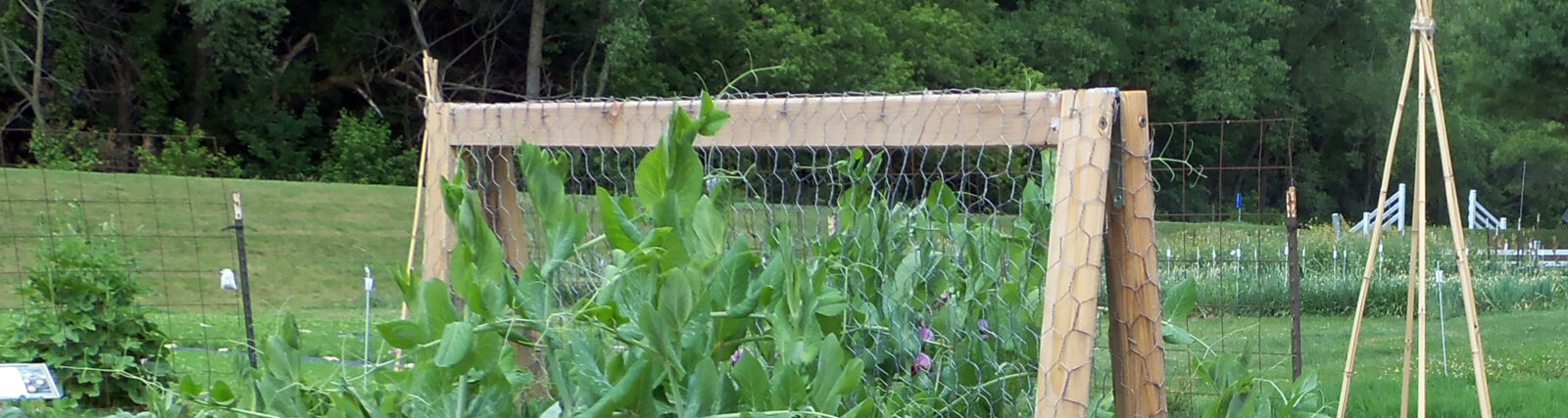
Some crop types—like cucumbers, tomatoes, and pole beans—need the extra support a trellis can provide. Other crop types, like melons and squash, don’t require trellises but can benefit from being lifted off of the ground.
When fruits are suspended from a trellis and kept from the soil surface, they are less prone to disease, and going vertical means that plants can grow vertically instead of sprawling, opening up some garden real estate on which to plant other crops. Trellises also have the benefit of making harvesting easier, as produce is at eye level and simpler to find and collect.
Here are some of the trellis solutions we have used at Seed Savers Exchange:
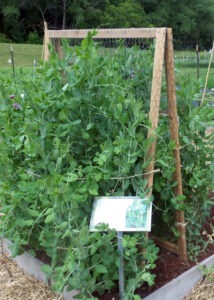
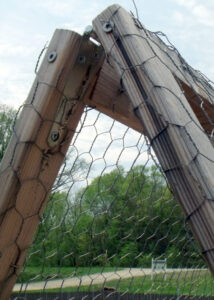
How to make a chicken wire A-frame trellis:
This construction allows flexibility of width in the garden and flat winter storage. This is a good trellis for peas, shorter pole beans, and vining flowers.
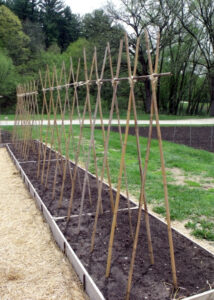
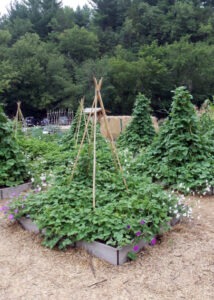
Bamboo stakes are incredibly useful around the garden, and trellis systems of all types can be made with a handful of stakes and twine.
How to build trellises with bamboo two ways:
Bamboo trellis systems work well with pole beans, runner beans, and other strongly twining climbers. Bamboo is not recommended for cowpeas and peas, as they have a more difficult time attaching to the smooth surface of the poles.

This trellising method is common at Heritage Farm and is an easy, cost-effective trellising method for home gardeners.
In place of T-posts, gardeners can use wooden stakes, PVC, or any other sturdy stake material.
We at SSE prefer to use either white box twine or baling twine, however gardeners can use any small string.
How to build a T-posts and twine trellis:
Watch this video to learn how to build this tomato trellis.

An alternative to the T-post and twine method, Trellises of T-posts attached to hog wire panels are a common sight on the Seed Savers Exchange farm because of their ease of installation and versatility.
How to build a T-post and hog panel trellis:
Drive two T-posts per panel into the ground, and attach hog wire panels to the posts with zip ties or twine. Both T-posts and hog wire panels are available at farm supply stores.
Vining plants will climb, and non-vining plants can be tied to the panel with twine for support.


Building an arch trellis is not only practical, but also adds visual interest to your garden.
How to build a trellis arch:
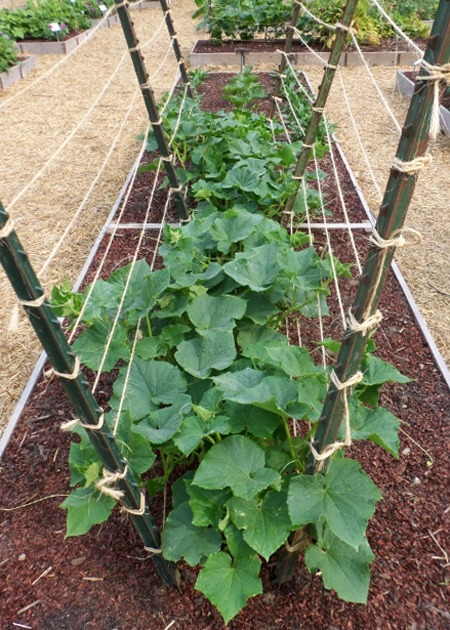
This experimental trellis system is used for displaying cucumbers and small melons.
How to build a display trellis for cucumbers and melons:
As cucumbers and other vining plants grow, the fruits will hang on the opposite side of the V in a decorative manner.

Twine can be used throughout the garden to provide support for vining plants. At Seed Savers Exchange, we string twine between wooden posts in the ground and hooks on the eaves of the barn to allow support for climbing morning glories.
Learn More
When you make a purchase from Seed Savers Exchange, you help fulfill our nonprofit mission to protect our food and garden heritage. Do even more good by making a donation to help us preserve and share even more heirloom varieties!